
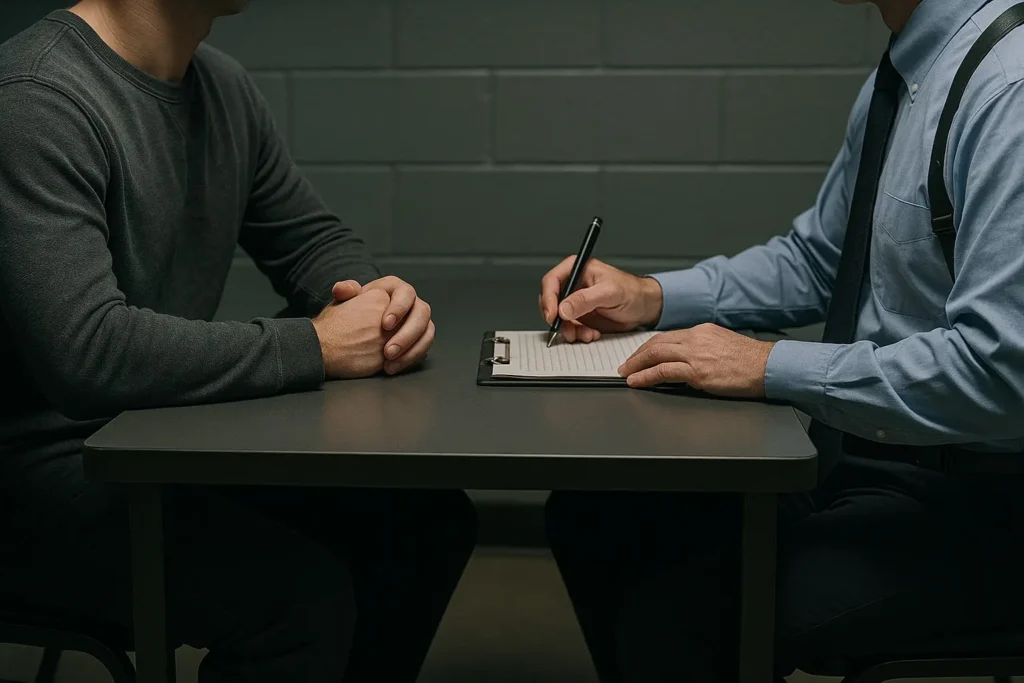
A summons to an informational interview at the police station can cause discomfort, even if you have done nothing wrong. In this text, we explain what such a summons means, what your rights are, and how best to proceed in order to protect yourself.
What Is an “Informational Interview”?
An informational interview is a form of communication with the police that usually precedes formal proceedings. The police’s aim may be to gather information from you as a witness or citizen, but it is also possible that you are already a potential suspect—without having been informed of this.
Are You Required to Respond?
If you receive a verbal or written summons, it is important to know that:
- You are not required to respond to a verbal summons.
- A written summons bearing the official seal and signature of the competent authority may be binding, depending on your status in the proceedings.
If you are unsure about the nature of the summons, consult a lawyer before taking any
action.
Do You Have the Right to a Lawyer During an Informational Interview?
Yes—at any time. Even if the police say it is “just a conversation,” you have the right to:
- Refuse to speak without a lawyer present.
- Request legal assistance before giving any statement.
Remember: what you say may be used against you in later proceedings.
What May You Say, and What Should You Not Say?
- You have the right to refuse to answer questions.
- You are not required to provide evidence against yourself or others.
- If you give a statement, be specific, but do not speculate or make assumptions.
It is always better to say: “I would like to speak with my lawyer before we
continue.”
Consequences of Not Appearing for an Informational Interview
If you refuse to respond:
- To a verbal summons—there are no consequences.
- To a written summons—the police may propose compulsory appearance if you are a witness or a suspect in formal proceedings.
That is why it is important to know your status before making a decision.
Conclusion: Be Cautious and Legally Protected
A call from the police is not something to ignore—but it is also not a reason to panic. With legal counsel by your side, you are protected and have better control over the situation.
If the police have called you or you expect such a call—do not respond on your own.
Call a lawyer.
Do You Need Advice?
Contact us for urgent consultations.